Recommend

Website antivirus
Why you need a website antivirus
Hosting providers ensure security for servers and software shells, but if the password is compromised or the website code is vulnerable, scammers can use malware, change settings, initiate spam on behalf of the administrator, or simply block the owner’s access to the resource.
Antivirus protection allows us to detect even the slightest security threats and take prompt measures to neutralize them, including automatic or manual treatment in most cases. You can minimize negative consequences even if your resource has already been infected.
Real-time attack protection (WAF)
CRM and Frameworks: Popular CMS, CRM, and frameworks are protected by a firewall that deploys automatically and protects the site from hackers, brute-force attacks, malware, and bots, XSS/SQL injections, malicious file uploads, suspicious activity. Full list of supported systems.
Virtual Patching
Virtual Patching fixes vulnerabilities in files, themes, plugins, and website components. It intercepts malicious traffic targeting specific vulnerabilities until an official security update is available. It provides additional protection until the developers release an official patch.
Website Insurance
To not only prevent a website hack but also minimize its consequences if necessary, choose plans with insurance—website recovery assistance from qualified professionals is already included in the insurance policy.
Consequences of malware infection
For business
Loss of access to the website’s control panel and loss of all data
For reputation
Loss of customers’ personal data and infection of their devices
For SEO
Drop in search engine rankings
For visit statistics
Blocking by browsers and antivirus programs
How antivirus protection works
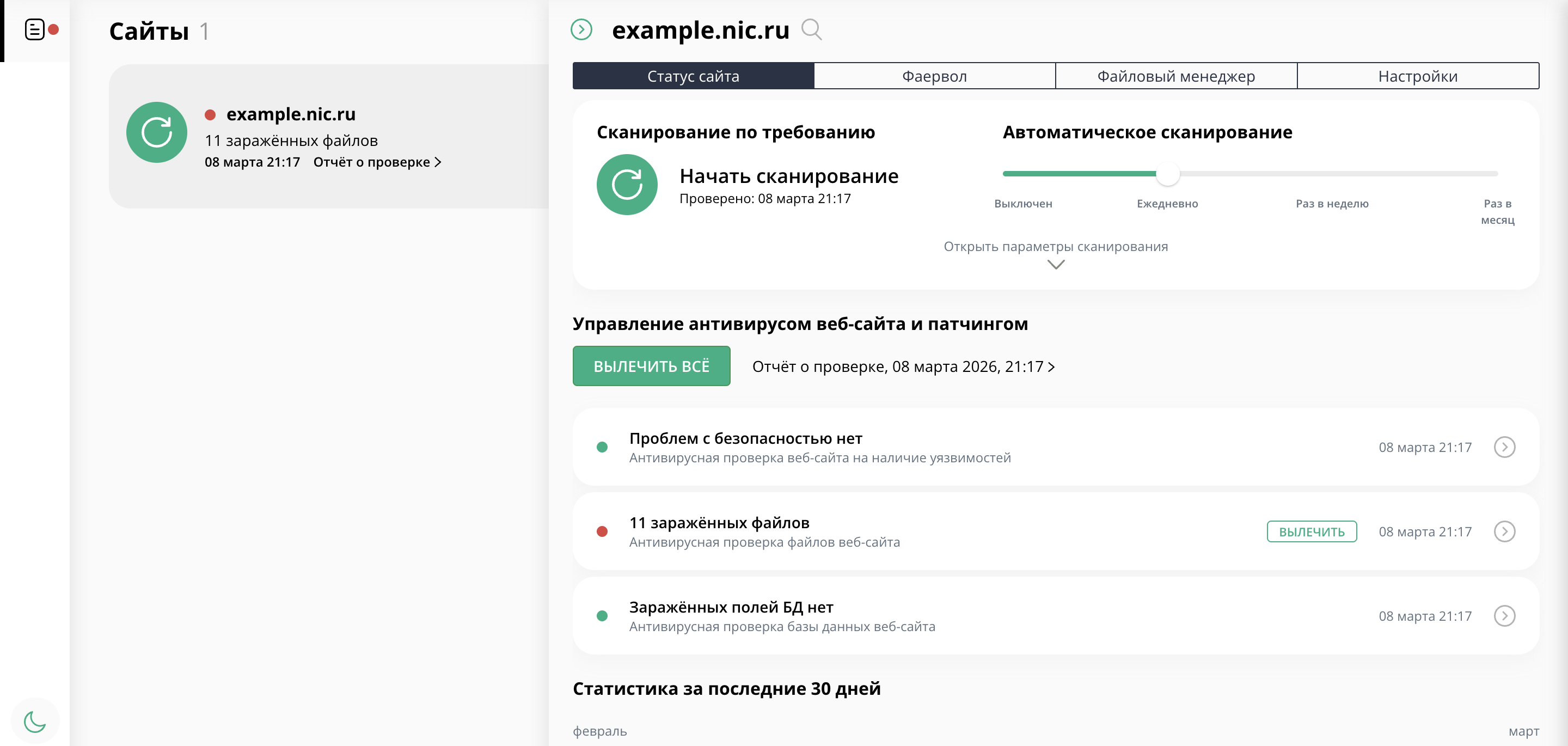
Intuitive interface
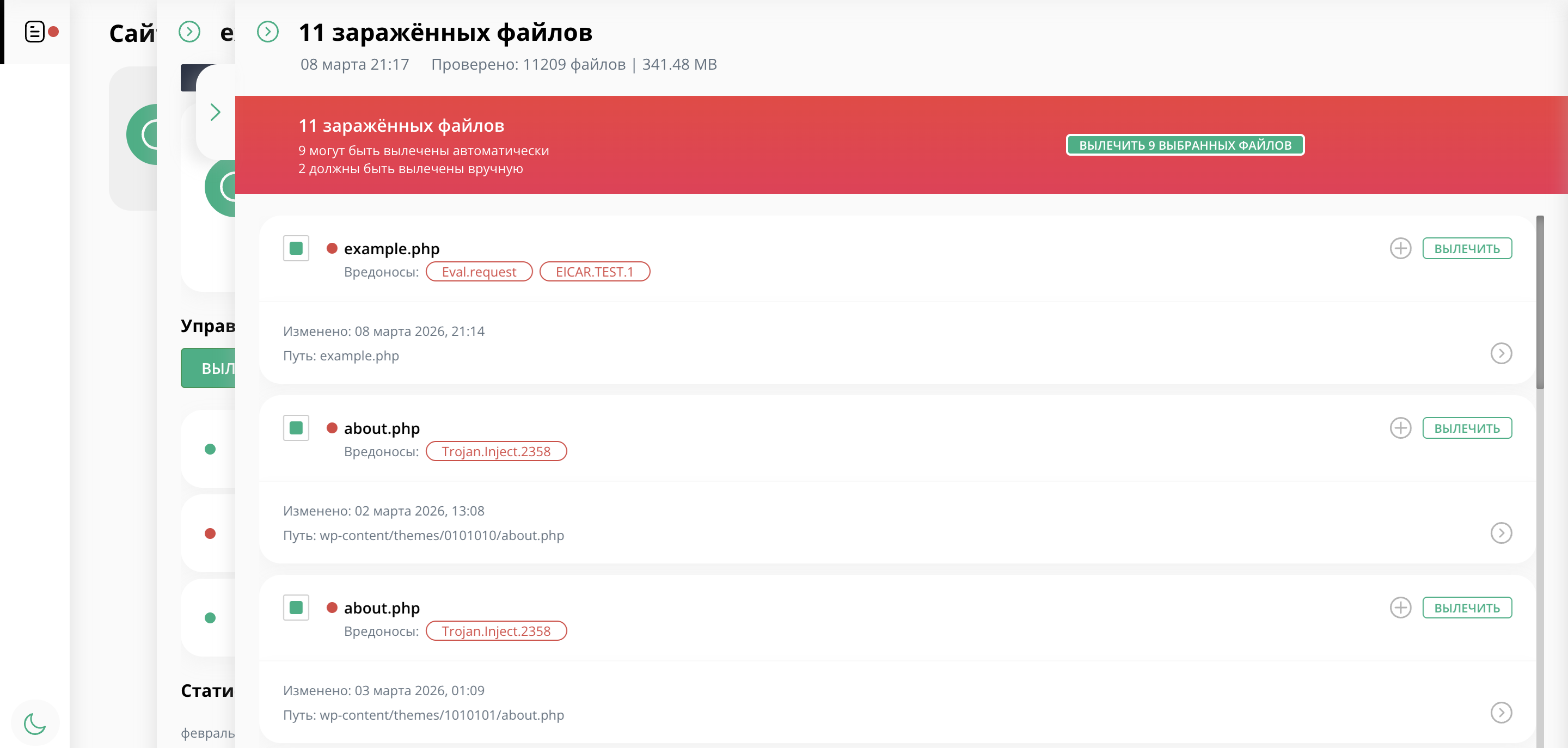
Automatic and manual virus removal
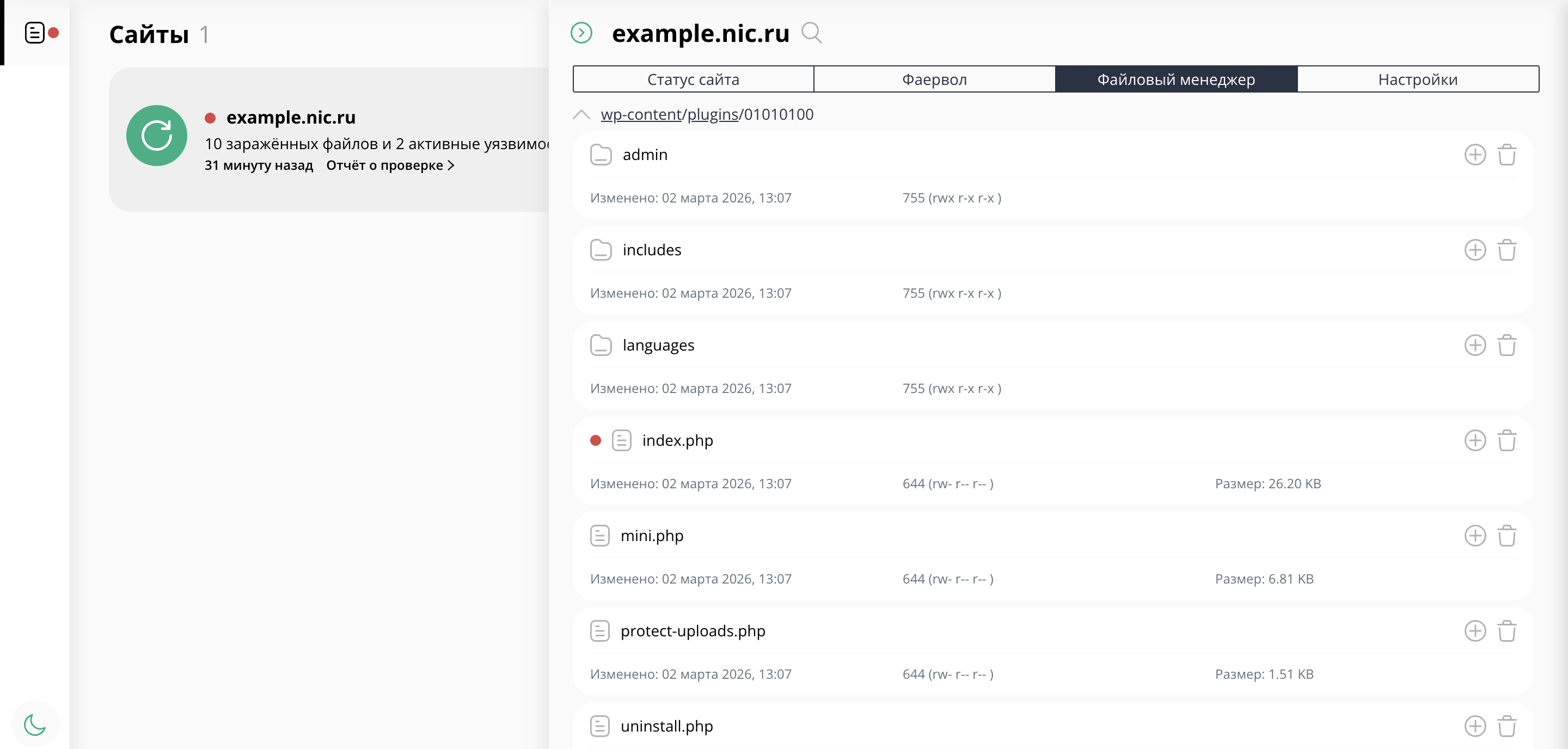
File manager with code editor
Regularly checking files and databases on the hosting allows you to detect threats: to disable curable infections in automatic mode and identify suspicious and incurable ones, check if a site is blacklisted, prevent external attacks with the built-in software firewall.
The service provides:
- a list of infected files;
- results of automatic file and database treatment.
Frequently asked questions
How do I order the Website Antivirus service?
For what term can I order the service?
Can I buy one Website Antivirus price plan for several websites?
Can I switch to a different plan?
Still have questions?